Česky (CZK)
 Deutsch (EUR)
 Polski (EUR)
 Slovensky (EUR)
 Magyar (EUR)
 Română (EUR)
 български език (EUR)
 Dansk (EUR)
 Eesti keel (EUR)
 Suomen kieli (EUR)
 Français (EUR)
 Italiano (EUR)
 lietuvių kalba (EUR)
 latviešu valoda (EUR)
 Dutch (EUR)
 Português (EUR)
 Ελληνικά (EUR)
 Slovenščina (EUR)
 Español (EUR)
 Svenska (EUR)
 Hrvatski (EUR)
 українська мова (EUR)
Do you suffer from insomnia? Find out what really helps!
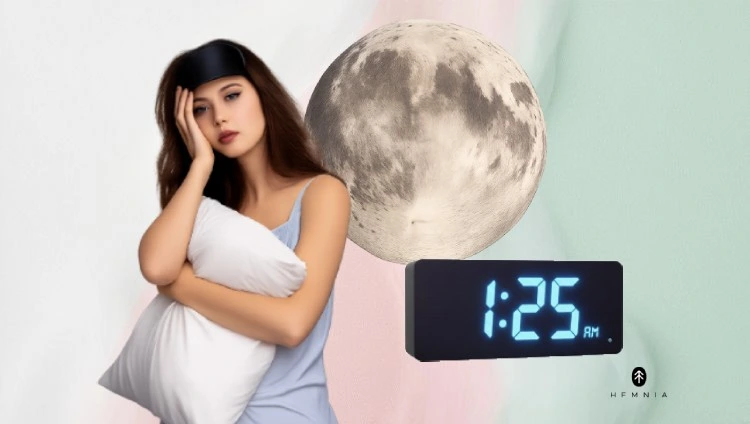
You feel tired all day long and can only think about one thing — how you're going to sleep at night. The long day is over, you finally turn off the lights, lie down in bed, close your eyes — and nothing! The minutes tick by, your thoughts race, and suddenly it's dawn.
- What causes insomnia?
- You can help yourself
- When is it time to seek professional help?
- How to get rid of insomnia
- FAQ
Approximately 16% of adults suffer from insomnia, with women being affected more often than men. According to research by the Centres for Disease Control and Prevention, one in three American adults suffers from sleep deprivation.
Philips research has shown that 62% of respondents have sleep problems, with insomnia being the most common sleep disorder.
Did you know that adults need at least 7 hours of quality sleep every day? Sufficient and quality sleep is crucial for physical and mental health.
Poor sleep not only causes fatigue, but can also result in mood swings and poor concentration, cause memory lapses and, in the long term, contribute to the development of serious health problems such as weakened immunity, obesity, diabetes, or heart and brain disease.
If you sleep poorly and type "what helped you with insomnia" into a search engine to find out how to help yourself, this article is for you. But before we reveal how to treat insomnia, we need to understand what causes it.
What causes insomnia?
There can be a number of causes of insomnia. Often, insomnia is a secondary symptom of another problem. These include:
- Mental distress: Mental tension is one of the most common causes of sleep problems. Up to half of people with chronic insomnia also suffer from stress, anxiety or depression.
- Poor sleep habits: Excessive caffeine consumption and exposure to blue light, sleeping during the day, and irregular or late bedtimes can all disrupt your sleep rhythm. Your body then does not know when to sleep and when to stay awake.
- Health problems and medication: If you suffer from an illness, your sleep problems may be related to it. Chronic pain, sleep-disordered breathing and other health problems can interfere with restful sleep. Poor sleep can also be a side effect of certain medications.
- Hormonal influences in women: Insomnia may be related to hormonal changes in the body, both during the menstrual cycle and during pregnancy or menopause.

You can help yourself
What helps with insomnia? You can usually help yourself at home, either by changing your habits or taking natural supplements.
Habit changes
To achieve quality sleep, it is often enough to:
- Minimise stress: Try to minimise stress in your life. Only take on as much work as you can handle and set aside time for rest. An evening spent with a friend, regular journaling or meditation can help relieve stress. Breathing exercises or anti-stress scents can help during the day and before bedtime.
- Maintain a healthy lifestyle: Eat healthily and regularly, do not overeat at night, drink plenty of fluids, and exercise regularly. Avoid alcohol, cigarettes, and other substances that are harmful to your health.
- Maintain good sleeping habits: Avoid caffeine in the afternoon. Do not look at a screen for at least half an hour before bedtime — this will eliminate the influence of blue light and calm your mind. Go to bed at the same time every day and sleep in a dark, quiet, well-ventilated room at a temperature between 18-20 °C.
Consistency and patience are key — these complex changes may take several weeks to show up in your sleep.
Natural supplements
You can also support your sleep with various natural supplements.
- Cannabinoids: Cannabinoids have gained popularity in recent years for a range of potential therapeutic benefits. These cannabis-derived substances act on the body's endocannabinoid system and regulate a range of processes, including sleep.
- CBD: CBD is the most studied cannabinoid, which has been shown in research to contribute to relaxation of the body and mind.
- CBN: CBN is a newly researched cannabinoid. Human research from 2022 and rat studies from 2024 have shown that it may improve sleep.
- Herbal supplements: Research shows that various plants, such as valerian, can reduce anxiety, shorten the time it takes to fall asleep, prolong sleep time and improve sleep quality, without side effects.
- Superfoods: There are many exotic extracts on the market that may have a positive effect on sleep. Ashwagandha showed 72% effectiveness in a 2020 study, and kava kava contributed to faster and deeper sleep in a 2005 study on rats.
- Melatonin: Melatonin is a hormone that signals to the body when it is time to go to sleep. It can shorten the time it takes to fall asleep, prolong the total amount of sleep and improve its quality.
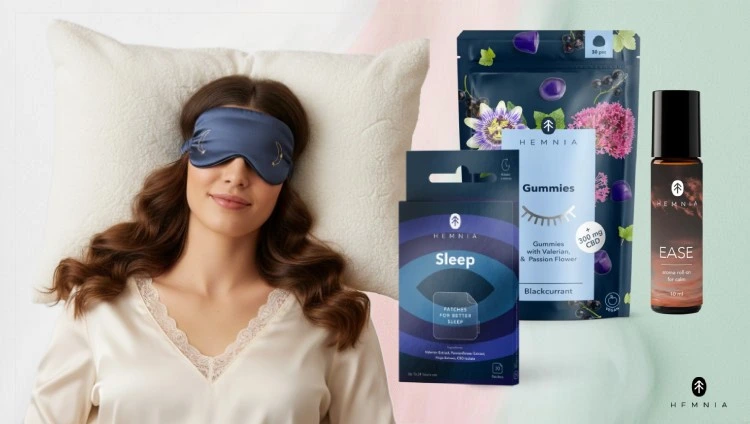
In our e-shop, you will find a wide range of over-the-counter products that can help you with sleep problems. You can choose from a wide range of CBD and CBN oils, or you can try, for example, Hemnia CBD gummies with valerian and passion flower, Hemnia Sleep patches and Hemnia Ease roll-on.
When is it time to seek professional help?
If your sleep problems persist despite following healthy habits and using natural supplements, it is time to consult a professional.
- Change your treatment: If you suffer from an illness and have long-term sleep problems, be sure to consult your doctor. Your doctor may prescribe different medication or recommend a suitable complementary treatment for insomnia.
- Consider therapy: As mentioned above, insomnia often has psychological causes. If you are struggling with problems in your life, do not be afraid to visit a therapist who will help you find the real cause of your suffering, support you in finding a solution, and recommend methods and other types of therapy that may help you.
If you are specifically interested in therapy to improve your sleep, look for a specialist in cognitive behavioural therapy who will teach you how to fall asleep faster and sleep better in just a few sessions.
Sleeping pills should be a last resort. They are a short-term solution — they are not used long-term because the body gets used to them and the drugs lose their effectiveness. They are also addictive. If your doctor has prescribed pills, always follow their instructions and never exceed the dosage. Never combine medication with alcohol.
How to get rid of insomnia
Insomnia is usually the result of another problem — mental distress, unhealthy sleep habits, illness or hormonal changes.
If you suffer from poor sleep, minimise stress, maintain a healthy lifestyle and good sleeping habits. Natural products can also help — cannabinoids, such as CBD or CBN oils, herbal supplements or supplements containing melatonin.
If your sleep does not improve, consider seeing a doctor and undergoing cognitive behavioural therapy.
Sleeping pills should be a last resort — they lose their effectiveness with long-term use and can be addictive.
FAQ
1. Can pregnancy cause insomnia?
Yes, it can. The body of an expectant mother undergoes dramatic hormonal changes in a short period of time, so it is no surprise that this also affects sleep. The vast majority of women (up to 94%!) suffer from poor sleep during pregnancy, especially as the pregnancy progresses.
Insomnia during pregnancy can cause fatigue, contribute to pregnancy depression and even be linked to complications during childbirth — so don't underestimate it! Quality sleep should be your priority, and you should always get as much rest as your body needs.
What helps with insomnia during pregnancy? In addition to changing your habits and taking natural supplements, a pregnancy pillow can help by providing support for your growing belly and relief for your back and joints.
If you have long-term sleep problems during pregnancy that seriously affect you, be sure to consult your doctor, who will recommend the appropriate course of action.
2. Can menopause cause insomnia?
Yes, because during menopause, the female body experiences a decline in oestrogen and other significant hormonal changes. During perimenopause, 16-47% of women suffer from insomnia, and in postmenopause, as many as 35-60% of women. Women struggle with:
- mood swings and anxiety,
- hot flushes and night sweats,
- headaches,
- joint pain.
What to do about insomnia during menopause? If you have good habits and natural supplements are not working for you, do not hesitate to consult your doctor. They may recommend a psychologist, prescribe short-term sleeping pills, or start hormone replacement therapy.
3. How to cure insomnia in 12 minutes?
It's late at night and you've been tossing and turning in bed for hours, thinking about how you have to get up for work in a few hours — we've all been there.
You can't cure insomnia in 12 minutes, but there are techniques that can help you fall asleep faster and improve the quality of your sleep:
- Calm your senses: Eliminate distractions — put on an eye mask and earplugs or headphones. While some people prefer complete silence, others find that relaxing music, nature sounds, or white noise helps them fall asleep.
- Breathing exercises: Try breathing exercises, such as the 4-7-8 breathing method made famous by American physician Andrew Weil. Breathe in through your nose for 4 seconds, hold your breath for 7 seconds, and slowly exhale through your mouth for 8 seconds. Repeat until you feel relaxed.
- Muscle relaxation: Lie down and gradually tense and relax the muscles in your body. Start with your toes – tense them for 5 seconds, then relax. Continue through your calves, thighs, abdomen, arms and up to your face. This method releases tension from both your body and mind.
- Visualisation meditation: Find and play guided meditation videos on the internet – the instructor will guide you through a calming image and lead you to visualise it and thus relax.
- Natural supplements or sleeping pills: Natural supplements or sleeping pills can provide quick relief.
Sources:
- https://pmc.ncbi.nlm.nih.gov/articles/PMC12676268/
- https://www.cdc.gov/sleep/data-research/facts-stats/adults-sleep-facts-and-stats.html
- https://www.usa.philips.com/c-dam/b2c/master/experience/smartsleep/world-sleep-day/2019/2019-philips-world-sleep-day-survey-results.pdf
- https://aasm.org/resources/pdf/pressroom/adult-sleep-duration-consensus.pdf
- https://my.clevelandclinic.org/health/diseases/12119-insomnia
- https://pubmed.ncbi.nlm.nih.gov/37796540/
- https://www.sydney.edu.au/news-opinion/news/2024/11/12/cannabinol-increases-sleep-objective-measure-lambert.html
- https://pubmed.ncbi.nlm.nih.gov/32540634/
- https://pubmed.ncbi.nlm.nih.gov/15700178/
- https://journals.plos.org/plosone/article?id=10.1371%2Fjournal.pone.0063773
- https://pubmed.ncbi.nlm.nih.gov/11302564/
- https://pubmed.ncbi.nlm.nih.gov/37899385/
- https://pmc.ncbi.nlm.nih.gov/articles/PMC4935047/
- https://www.ncbi.nlm.nih.gov/pmc/articles/PMC9190958/
Author: Natálie Kubíčková
Photo: AI
Briefly and simply:
- Hemnia does not want to and cannot replace the professional care of your doctor.
- Hemnia products are not medicines (or medicines), so please do not treat them as such.
- Hemnia offers cannabis products, but do not look for any narcotic or psychotropic substances with us. We do not offer or recommend them.
Read the full text of the Disclaimer here.
Recommended products5


Good Night´s Sleep Gummies - 300 mg CBD, 30pcs x 10 mg - dietary supplement for better sleep with valerian, passionflower and CBD
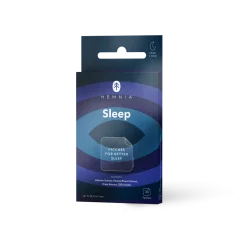
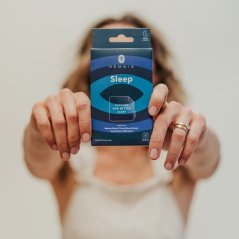
Sleep - Patches for better sleep, 30 pcs

CBD Oil 10% THC Free, 1000 mg, 10 ml


Good Night's Sleep MCT Coconut Oil 40%, 4000 mg CBN, 250 mg CBD, 10 ml