


 Česky (CZK)
 Deutsch (EUR)
 Polski (EUR)
 Slovensky (EUR)
 Magyar (EUR)
 Română (EUR)
 български език (EUR)
 Dansk (EUR)
 Eesti keel (EUR)
 Suomen kieli (EUR)
 Français (EUR)
 Italiano (EUR)
 lietuvių kalba (EUR)
 latviešu valoda (EUR)
 Dutch (EUR)
 Português (EUR)
 Ελληνικά (EUR)
 Slovenščina (EUR)
 Español (EUR)
 Svenska (EUR)
 Hrvatski (EUR)
 українська мова (EUR)
What is CBD? Everything you need to know about cannabidiol
CBD is no longer an unfamiliar acronym, yet there are still plenty of questions surrounding this substance. What is CBD and is it legal? What is CBD oil used for, and what are CBD gummies, CBD flowers and other products containing cannabidiol? We’ve put together an overview of the most important information to help you find your way around the world of CBD.
- What is CBD?
- Is CBD legal? 👮
- How does CBD work in the body?
- Is CBD addictive?
- How is CBD extracted?
- What CBD products are available?
- Are you feeling more at home in the world of CBD now?
- FAQ
What is CBD?
CBD, or cannabidiol, is one of the naturally occurring compounds in the cannabis plant. 🌿 It belongs to the group of cannabinoids, which also includes the better-known THC.
In addition to these compounds, cannabis also contains more than 100 other cannabinoids, such as CBG and CBN.
The effects of individual cannabinoids on the human body have long been the subject of scientific research.
The CBD content in cannabis varies depending on the specific strain of the plant. It is influenced primarily by genetics, but also by growing conditions.
Is CBD legal? 👮
CBD is not classified as an illegal narcotic substance in the EU. CBD products are produced from industrial hemp, which must comply with the EU’s THC content limit – according to the European Commission, this limit is 0.3 %.
However, specific requirements for CBD products may vary from country to country. It always depends on the composition, nature of the product, THC content and the regulations of the country in question.
How does CBD work in the body?
When discussing cannabinoids, you will often come across the term endocannabinoid system (ECS). This is a natural part of the human body that plays a key role in maintaining our body’s homeostasis and helps regulate a range of functions (such as sleep, body temperature and mood).
The endocannabinoid system consists of endocannabinoids, enzymes and the endocannabinoid receptors CB1 and CB2.
For example, THC binds directly to endocannabinoid receptors; its psychoactive effects are primarily linked to the activation of CB1 receptors.
In contrast, CBD probably does not bind directly to CB1 receptors, but merely modulates their activity. Research is also focusing on its interactions with other receptors and enzymes, its metabolism and other mechanisms of action within the body.
In particular, the following are being investigated:
- CBD and sleep,
- CBD and fatigue,
- CBD and headaches,
- CBD and anxiety, depression
- CBD and pain, inflammation,
- CBD and skin problems,
- CBD and asthma,
- CBD and animals.
Is CBD addictive?
According to the World Health Organisation (WHO), pure cannabidiol shows no signs of abuse potential or dependence.
The WHO has therefore recommended that products containing pure CBD should not be subject to international control as narcotic drugs.
How is CBD extracted?
CBD is extracted from the cannabis plant using various extraction methods. The resulting extract is then further processed and, where necessary, purified or modified.
It is precisely the method of extraction and subsequent processing that determines what type of product is produced.
What CBD products are available?
There are various types of CBD products on the market today, which differ in their composition, CBD concentration and method of production.
Among the best-known and most popular forms are CBD oils 💧 , also known as CBD drops. However, you may also come across the following products:
What are CBD drops used for, and what is CBD oil used for? 💧
CBD oils, also known as CBD drops, contain an extract derived from hemp, which is mixed with a carrier oil.
Depending on the type of extract used, CBD oils may contain not only cannabidiol but also other naturally occurring compounds from hemp, such as terpenes, flavonoids or other cannabinoids:
- Full spectrum – contains CBD, terpenes and other cannabinoids, including THC within legal limits.
- Broad spectrum – contains CBD, other cannabinoids, terpenes and other compounds, but no THC.
- CBD isolate – the purest form of CBD, free from terpenes and other cannabinoids.
CBD oils are available in concentrations ranging from 5% to 40%. This figure on the packaging indicates how much CBD the product contains.
In the case of 10% CBD oil, ‘10%’ refers to the CBD extract content, with the remainder (90%) consisting of carrier oil. A 10 ml bottle of 10% CBD oil therefore typically contains 1,000 mg of CBD.
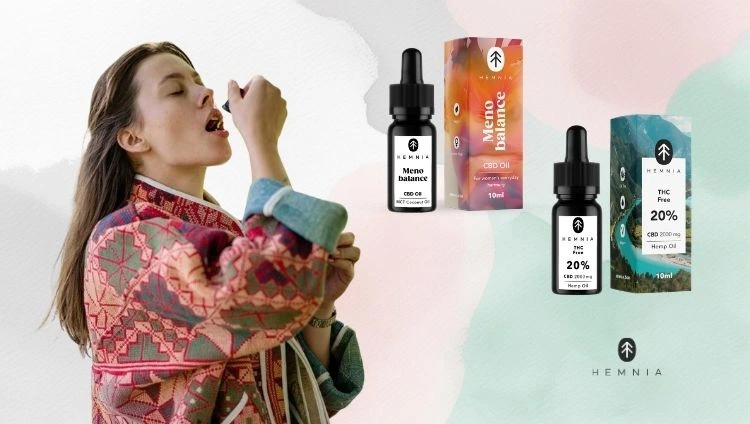
Tip: As well as traditional CBD oils, there are also CBD sprays and CBD tinctures. Read about the main differences between CBD oil and CBD tincture.
The carrier oil complements the main ingredient in CBD oil, and hemp, coconut, olive, grape seed or MCT oil are most commonly used in production.
What are CBD flowers? 🌿
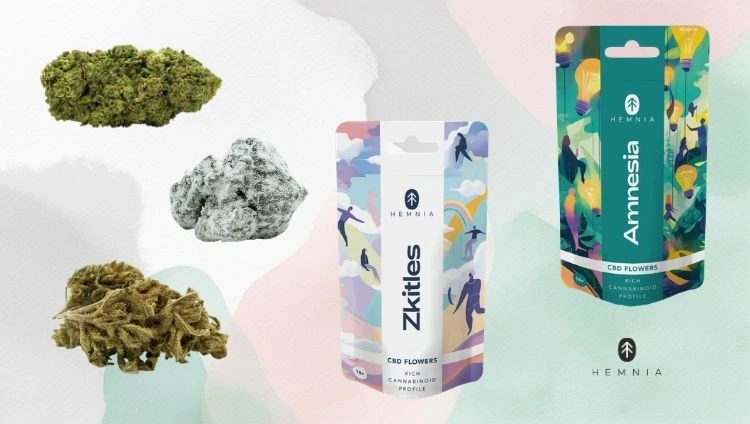
CBD flowers are dried cannabis buds that contain CBD, as well as other naturally occurring compounds such as terpenes, flavonoids or other cannabinoids, including THC within the legally permitted limit.
Depending on the cultivation method, CBD flowers are most commonly categorised as:
- Outdoor CBD flowers – grown outdoors in natural conditions.
- Indoor CBD flowers – grown indoors, where factors such as light, temperature and humidity can be better controlled.
- Greenhouse CBD flowers – grown in a greenhouse, where the plants benefit from natural light whilst being protected from adverse conditions.
You may also come across special forms of CBD flowers known as Moon Rock and Ice Rock, which are produced by further processing already dried flowers and have a high CBD content.
What are CBD gummies? 🍬
CBD gummies are chewy sweets containing cannabidiol (CBD). They are produced in the classic gelatine version or in a vegan version made from pectin.
They are often flavoured with natural aromas, and some varieties also contain other plant-based ingredients such as valerian or passionflower.
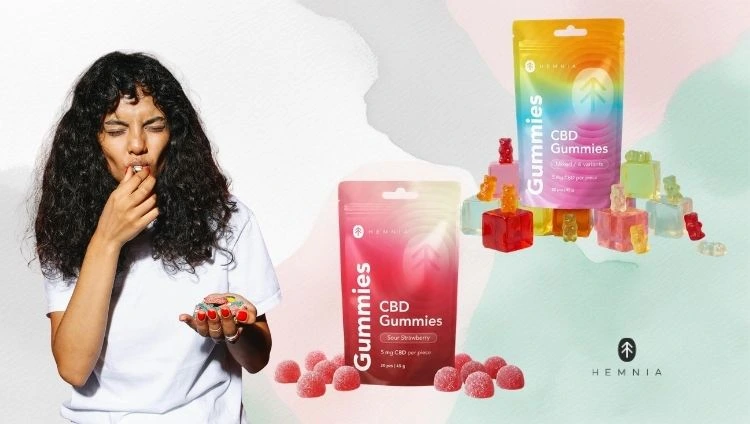
However, CBD gummies aren’t the only edible products containing cannabidiol. You can also find CBD chocolates, biscuits, chewing gum and lollipops on the market.
And what about CBD cosmetics? 🧴
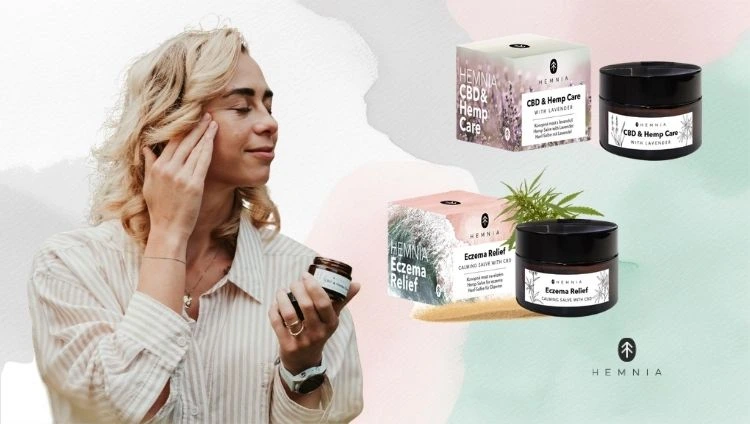
Cosmetic products also contain CBD – there are CBD creams, serums, balms, body oils and other products designed for skin care.
In cosmetics, cannabidiol is just one of the ingredients used; alongside it, products may contain, for example, plant oils, butters or herbal extracts.
Other CBD products
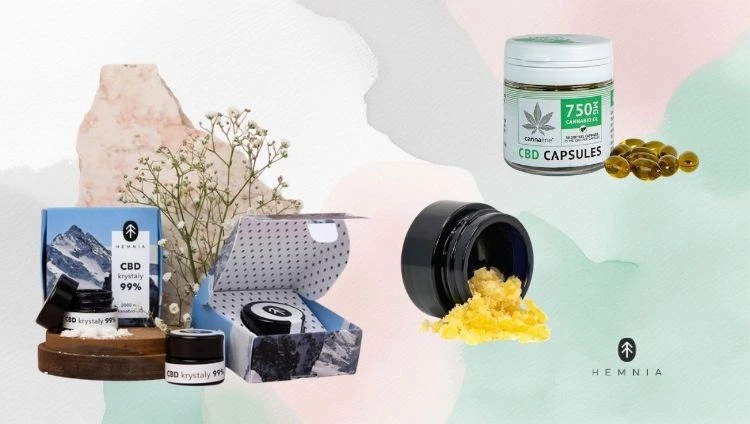
As well as CBD oils, gummies, flowers and cosmetics, other forms of cannabidiol products are also appearing on the market – CBD capsules, CBD crystals, CBD hash, and CBD extracts and concentrates:
- CBD crumble – a hemp extract with a crumb-like texture.
- CBD shatter – a brittle, translucent concentrate that looks like glass.
- CBD budder – a concentrate with a soft, creamy to whipped consistency.
- Terpsolate – a combination of CBD isolate (CBD crystals) and terpenes.
- CBD crystals – up to 99% pure CBD without any other cannabinoids or terpenes.
- Ice-o-lator – an extract produced using ice-cold water and a sieve.
- CBD live resin – a concentrate produced from freshly harvested and rapidly frozen cannabis.
- CBD wax – a concentrate with a consistency similar to beeswax.
Tip: You can read more about the individual extracts in the article Cannabis concentrates and extracts: What are crumble, budder, badder and shatter.
Are you feeling more at home in the world of CBD now?
CBD is one of the best-known cannabinoids found naturally in hemp and is now found in a wide range of products – the most common being CBD oils, CBD flowers, gummies and cosmetics.
Individual products differ in terms of composition, concentration, type of extract (broad-spectrum, full-spectrum or isolate) and processing method.
Now you know what lies behind the most common terms from the world of CBD. Browse Hemnia’s range and find your favourite.
FAQ
1. How should I take CBD oil?
There are several ways to take CBD oil – it depends on which one suits you best. Check with the specific manufacturer for details on how to use CBD oil.
2. How long does CBD stay in the body?
The length of time CBD remains in the body varies from person to person. It is influenced, for example, by the type of product, the amount of CBD, metabolism and other individual factors.
3. How long does it take for CBD to take effect?
There is no single answer to this question. It all depends on the form and composition of the product, your metabolism and other individual factors.
4. How much CBD should you take?
It is not possible to specify a universal dose that would apply to all CBD products. Individual products vary in concentration and composition, so it is advisable to follow the information provided for the specific product or to consult a doctor.
Photo: AI, Canva
Briefly and simply:
- Hemnia does not want to and cannot replace the professional care of your doctor.
- Hemnia products are not medicines (or medicines), so please do not treat them as such.
- Hemnia offers cannabis products, but do not look for any narcotic or psychotropic substances with us. We do not offer or recommend them.
Read the full text of the Disclaimer here.
