


 Česky (CZK)
 Deutsch (EUR)
 Polski (EUR)
 Slovensky (EUR)
 Magyar (EUR)
 Română (EUR)
 български език (EUR)
 Dansk (EUR)
 Eesti keel (EUR)
 Suomen kieli (EUR)
 Français (EUR)
 Italiano (EUR)
 lietuvių kalba (EUR)
 latviešu valoda (EUR)
 Dutch (EUR)
 Português (EUR)
 Ελληνικά (EUR)
 Slovenščina (EUR)
 Español (EUR)
 Svenska (EUR)
 Hrvatski (EUR)
 українська мова (EUR)
How can you calm down quickly? Simple stress-relief techniques
Stress can strike when you least expect it – before an important meeting, an exam, or in the evening when so many thoughts are racing through your head that it’s hard to calm down and fall asleep. What helps with nerves and stress at times like these? We’ll look at simple stress-busting techniques and tips on how to calm down quickly.
- How can you calm down quickly? 😌
- How to cope with stress? 🙏
- What is stress and why do we feel it? 🤔
- How can I calm down before bed? 💤
- How can I calm down when I’m feeling on edge?
- How can I calm down before an exam? 🖊️
- Find a way to help you slow down
- FAQ
How can I calm down quickly? 😌
Do you often feel nervous, tense and exhausted? Long-term fatigue, anxiety or the feeling that you can’t really relax even in your free time may be a sign that your nervous system is chronically overloaded and in survival mode 🗡️.
Every day we face a host of responsibilities and stimuli that can keep us on edge – high demands at work, looking after the home, trying to juggle everything at once. In the daily rush, it isn’t always easy to find a moment to rest.
If we don’t allow ourselves enough time to relax and recharge, we may gradually start to feel tired, irritable, have trouble sleeping 😴 or feel as though we can’t truly switch off.
When you feel stress starting to take over, you don’t need to look for a complicated solution straight away. Sometimes it’s enough to slow down for a few minutes and refocus your attention on yourself. You can try this when you need to calm down quickly.
Simple stress-relief techniques
If you’re looking for a way to manage stress, start with simple techniques that allow you to slow down for a moment, release tension and bring your attention back to yourself.
You might remember one of these techniques just when you find yourself in a stressful or anxious situation, and it will help you cope better.
1. Breathing exercise 4-7-8 🫁
Breathe in slowly through your nose 👃 and count to 4, then hold your breath for 7 seconds, and finally breathe out through your mouth 👄 whilst counting to 8. Repeat this breathing exercise a few times.
The slow, prolonged exhalation is particularly important, as it is associated with the activation of the parasympathetic branch of the autonomic nervous system – the part responsible for rest and recovery.
2. Abdominal breathing 🫄
Place one hand on your chest and the other on your abdomen. Breathe in slowly through your nose 👃 so that your abdomen rises as you inhale, whilst your chest remains still. Then breathe out slowly.
You can repeat this breathing exercise for a few minutes.
3. The 5–4–3–2–1 technique 👀
Try focusing your attention on specific things around you – what you can see, hear or feel right now. This can help you shift your attention away from overwhelming thoughts 💭 and back to the present moment.
In stressful or anxiety-inducing situations, the 5–4–3–2–1 technique is often used, in which you count down, naming the following:
- 👀 5 things you can see,
- 🖐️ 4 things you can touch,
- 👂 3 things you can hear,
- 👃 2 smells you can smell,
- 👄 1 taste you can currently sense in your mouth.
4. Vagus nerve stimulation 🧠
The vagus nerve (also known as the nervus vagus) is the tenth cranial nerve and an important part of the parasympathetic nervous system.
This nerve connects the brain to a number of organs, such as the heart 🫀, lungs 🫁 and digestive tract, and plays a role, for example, in reducing stress and slowing the heart rate.
The parasympathetic nervous system is often referred to as the ‘rest and digest’ system, as it allows the body to unwind and relax, and works to build up and store energy reserves.
You can support the activity of the vagus nerve, for example, by:
- Deep breathing – exhaling for longer than inhaling.
- Cold water – splashing your face with cold water.
- Humming and singing – as the vagus nerve runs past the larynx and vocal cords, the vibrations produced when singing or speaking naturally stimulate and activate it.
5. Relaxation techniques 🧘
Relaxation techniques can help release built-up tension, slow you down and focus your attention on the present moment:
- 💪 Progressive muscle relaxation – this involves alternately tensing and relaxing individual muscles, allowing you to clear your mind through physical sensations. Sit or lie down comfortably, take a few slow breaths in and out, and then focus on one hand, for example. Tense the muscles for a few seconds and then release them. You can do the same with your shoulders, stomach, legs or face. A study from 2024 found that this method is effective in reducing stress, anxiety and depression in adults.
- 🧘 Yoga – combines movement with conscious breathing and can be a pleasant way to combine relaxation with exercise whilst working on your mental wellbeing. According to a 2024 study, even a single yoga session can have a positive effect on some symptoms of acute stress.
- 💭 Meditation and mindfulness – focus attention on the present moment, for example on the breath, bodily sensations or surrounding sounds. The aim is not to stop all thoughts, but to let them gradually fade away without the need to dwell on them.
How to cope with stress? 🙏
There is no single universal solution that helps with stress and instantly eliminates it. However, small habits and rituals can help, giving both body and mind space to slow down, release tension and recover more effectively.
You don’t need to change your entire routine – sometimes it’s enough to start with one or two things that you enjoy and can easily fit into your daily life.
Different things might suit you at different times – it depends on whether you need to wind down, create some space for evening relaxation, or, conversely, top up your energy during a busy day.
What helps with nerves and stress?
For some, it might be exercise; for others, time on their own or mindful breathing; whilst for others still, aromatherapy or dietary supplements might help.
The following, for example, can contribute to greater mental wellbeing and stress management:
- Regular, good-quality sleep – getting enough rest helps both body and mind to cope better with everyday and long-term stress.
- Regular exercise – a walk, yoga, gentle stretching or another form of exercise can help release built-up tension.
- A healthy diet – a balanced, regular diet can help you maintain more stable energy levels throughout the day.
- Time away from smart devices – try putting your phone aside for a while, going for a walk outside or reading a book.
- Breathing, meditation and relaxation – conscious, slow breathing, meditation and relaxation can help you focus on the present moment.
- Simple stress-relief techniques – breathing exercises, focusing on the present moment, vagus nerve stimulation and other relaxation techniques.
- Relaxing the body – tension often builds up in areas such as the shoulders, neck or jaw; a short stretch can help.
- Setting priorities and learning to say NO – try to prioritise your tasks and cut back on those that don’t need to be done straight away. You don’t have to do everything at once.
- Time for yourself – set aside time for your hobbies and for things that bring you joy.
- Connecting with loved ones – sharing what’s troubling you, or spending time with people you feel comfortable with.
- Humour and laughter – look out for little moments during the day that make you smile.
- Aromatherapy – scents can influence our mood and also create a more pleasant atmosphere.
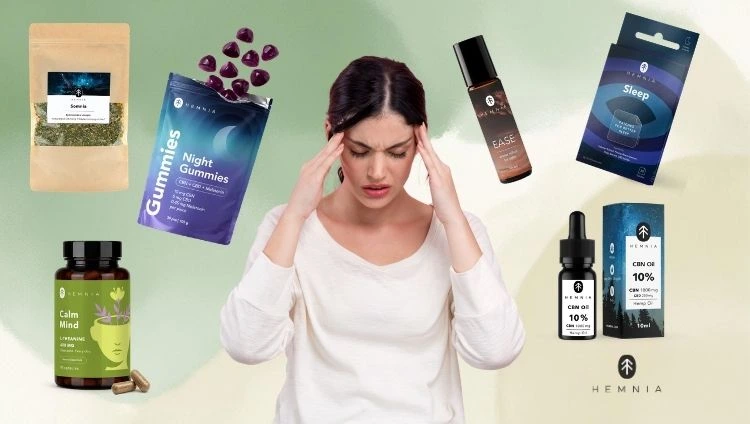
- Soothing drinks – for example, herbal blends containing hemp or superfoods. Chlorella or spirulina, for instance, can give you a boost of energy and vitality during more demanding periods.
- Functional patches – a practical and discreet option that you can incorporate into your daily routine. The range includes variants designed, for example, to aid sleep, concentration or energy boosts.
- Dietary supplements – for example ashwagandha is one of the traditionally used adaptogenic plants that are being researched for their potential to support mental balance and resilience to stress. L-theanine, on the other hand, is an amino acid naturally found in green tea leaves and is being studied in relation to a calm mind and everyday well-being.
- Small daily rituals – a warm shower, your favourite music, a good book, a moment away from your phone, social media and other distractions, or simply a few minutes to yourself – can be the ideal way to slow down during the day.
Tip: Find out how to use herbs and herbal blends to help you relax.
What is stress and why do we feel it? 🤔
Stress is the body’s natural response to situations we perceive as demanding, uncertain or threatening. It doesn’t necessarily have to be a real danger – a similar response can also be triggered by:
- work-related pressure,
- lack of sleep,
- conflicts,
- overwork,
- too many responsibilities,
- …
A stress response can manifest itself both mentally – for example, through heightened alertness, restlessness or a feeling of tension – and physically – through rapid breathing and a racing heartbeat, or increased muscle tension. In a situation of genuine danger, this mechanism serves a purpose – it prepares the body for a rapid response and can thereby save our lives.
In everyday life, we encounter life-threatening situations less frequently; instead, we are much more often exposed to a whole range of demands and pressures. The body can react to these too by triggering a stress response.
The fight, flight or freeze response
The moment the brain assesses a situation as threatening or stressful, the natural ‘fight, flight or freeze’ response may be triggered:
- Fight – the body prepares to face the danger and defend itself.
- Flight – the body tries to get away from the dangerous situation.
- Freeze – when neither fighting nor fleeing is possible, the body freezes.
When we find ourselves in a stressful situation, the body begins to release stress hormones such as adrenaline, cortisol and noradrenaline; our heart rate increases, muscle tension rises and our attention focuses on what is most important at that moment – survival.
Chronic stress: When to seek professional help?
Stress is not an enemy in itself; in the short term, it is useful to us – it helps us react quickly and cope with a challenging situation. The problem arises when it lasts for a long time or recurs too often. In such cases, we refer to it as chronic stress.
Chronic stress is a state of prolonged and constant tension and anxiety that lasts for weeks, months or even years. The body does not have enough time to rest and recover, which has negative effects on both mental and physical health and can gradually lead to:
- long-term exhaustion,
- severe fatigue,
- irritability,
- poor sleep,
- headaches,
- a weakened immune system,
- muscle tension,
- difficulty concentrating,
- …
It is advisable to seek professional help, particularly if the stress persists for weeks or months and you feel that you are unable to relax even when you have the opportunity to do so 😪.
Situations where stress begins to significantly affect your work, relationships or day-to-day functioning are also warning signs.
You can consult your GP, a psychologist or a psychotherapist ⚕️, who will help you identify the cause of your difficulties and advise you on the best way to deal with them.
The sooner you start addressing the causes of stress and give your body and mind time to recover, the greater the chance that long-term tension won’t become a regular part of your life.
How can I calm down before bed? 💤
Are you so tired that you feel you’ll fall asleep the moment you lie down, but your mind throws a spanner in the works and goes into overdrive? Thoughts about work, responsibilities or everything you need to sort out the next day can then make falling asleep a real struggle.
Try to stop working at least 30–60 minutes before bedtime, avoid scrolling through social media 📱 and steer clear of other stimuli that keep you on your toes. Instead, have a warm shower or bath, read a few pages of a book, put on some calm music, or prepare one of the herbal blends containing hemp or Hemnia .
A short meditation or some breathing exercises can also help. In the evening, it’s a good idea to dim the lights and opt for warmer shades.
For example, in a 2023 study, researchers found that light with a lower melanopic intensity (a measure of how strongly light affects our internal biological clock, sleep and wakefulness) led to less suppression of melatonin and a shorter time taken to fall asleep than light with a higher melanopic intensity.
Tip: Do you suffer from insomnia? Find out what might help you.

Hemnia Sleep Gummies or one of the CBD oils can also become part of your evening routine. You can also try Hemnia’s functional Sleep patches.
To make falling asleep easier, it’s worth going to bed at roughly the same time each night, limiting caffeine and alcohol in the evening, and keeping your bedroom cool, dark and quiet
Create a regular evening ritual that your body will associate with it being time to wind down, relax and prepare for sleep.
Tip: Read more about the different types of functional patches available and how they differ.
How can I calm down when I’m feeling on edge?
As soon as you feel tension building, try to pause for a moment and focus on your breathing. For example, use the 4-7-8 method and repeat it several times.
Other simple steps can also help you calm down:
- Change your surroundings – if you can, move to another room for a moment or go out into the fresh air.
- Relax your muscles – notice where tension is building up. It’s often in the shoulders, neck or jaw. Try to consciously relax these areas, straighten up, open your chest and let your shoulders drop.
- Focus on the present – instead of thinking about all the things that might happen, concentrate on what you can see, hear or feel right now. Use the ‘ ’ 5–4–3–2–1 technique .

Small rituals can also help, such as a cup of herbal tea, aromatherapy, calming music or a few minutes away from your phone and other distractions. Sometimes it’s enough to treat yourself to a short break, during which your body and mind are given space to relax.
How can I calm down before an exam? 🖊️
Feeling nervous before an exam is natural. The body reacts to an important situation with heightened alertness, a faster heart rate and muscle tension.
To a lesser extent, stress can even be useful and helps some people to concentrate better. This kind of positively perceived stress is called eustress – it can act as a motivator and, in the short term, boost concentration or performance.
However, when there is too much stress, it can actually impair your memory, concentration and ability to recall what you’ve learnt 🤯.
Just before an exam, try not to overload your mind with any more information. Instead of a final intensive revision session, take a break, have a drink of water and take a few slow breaths in through your nose and out even more slowly through your mouth. A short stretch or the 5–4–3–2–1 technique can also help, as it shifts your focus away from your nerves and back to what’s happening around you right now.
Try to adopt a positive mindset 🧠. Instead of thoughts like “I’m definitely not going to manage this”, tell yourself: “I’ve prepared as best I can, and I’ll manage it.” And if, by chance, the exam doesn’t go as planned, it doesn’t mean you’ve failed – one unsuccessful exam doesn’t determine your worth or what you’re capable of.
It can also help to get everything you need ready the day before and, on the evening before the exam, prioritise sleep over studying late into the night. On the big day, make sure to arrive with plenty of time to spare ⌚. A well-rested body and mind will often serve you better than another hour of stressful revision.
Find a way to help you slow down
In today’s hectic world, it isn’t always easy to slow down for a moment and make time just for yourself 🧘. Nevertheless, it’s important to find a moment during the day to calm down and release any built-up tension.
For some, exercise helps; for others, a few minutes of silence, breathing exercises 🫁, a warm shower, aromatherapy 👃 or another calming ritual. There’s no need to change your whole lifestyle all at once – often, it’s enough to incorporate small habits into your routine that you find enjoyable.
It’s important to recognise what really helps you in stressful situations and what, on the other hand, makes the stress worse. And if you feel that your stress is long-term and significantly affecting your day-to-day life, it’s a good idea to seek professional help.
FAQ
1. What helps with high levels of stress?
When experiencing severe stress, it can help to first calm your body and limit the number of stimuli. Try to slow down for a moment, focus on slow breathing, go for a walk, stretch, or treat yourself to some time in a peaceful environment.
In the long term, getting enough sleep, regular exercise, rest and minimising factors that exacerbate stress also play an important role. If the stress is very intense, persistent or significantly disrupts your daily life, it is advisable to seek professional help.
2. How can you tell if you’re under stress?
Stress can manifest itself both mentally and physically. Common symptoms include, for example, restlessness, irritability, difficulty concentrating, feeling overwhelmed or trouble sleeping.
Physical symptoms include a rapid heartbeat and breathing, muscle tension, sweating, headaches or digestive problems. However, stress can manifest itself slightly differently in each person.
3. Can stress cause diarrhoea?
Yes, stress can affect digestion. This can result in, for example, diarrhoea, stomach ache, bloating or, conversely, constipation. If digestive problems are severe, long-lasting or recur regularly, it is advisable to consult a doctor about the cause.
4. How can you increase your resilience to stress?
Resilience to stress is usually built up gradually. Regular sleep, exercise, sufficient time for recovery, a healthy diet and staying in touch with loved ones can all help.
It is also helpful to learn to recognise your own stress triggers and to regularly practise relaxation techniques, such as mindful breathing, meditation or progressive muscle relaxation.
It is also important to allow yourself some rest before you reach the point of complete exhaustion.
5. What are the physical symptoms of long-term stress?
Long-term stress can manifest itself, for example, as fatigue, muscle tension, headaches, sleep problems, changes in appetite or digestive difficulties.
Some people may also experience a racing heart, increased sweating or a general feeling of tension. However, these symptoms can have many different causes, so they cannot automatically be attributed to stress. If they persist or worsen, it is advisable to consult a doctor.
Sources:
- How Breath-Control Can Change Your Life: A Systematic Review on Psycho-Physiological Correlates of Slow Breathing
- Melanopic irradiance defines the impact of evening display light on sleep latency, melatonin and alertness
- NZIP.cz – stress hormones
- NZIP.cz – the parasympathetic nervous system
- NZIP.cz – the vagus nerve
- Internal senses of the vagus nerve
- The vagus nerve in appetite regulation, mood and intestinal inflammation
- The integrative neuroimmune role of the parasympathetic nervous system, the vagus nerve and the gut microbiota in stress modulation: A narrative review
- Efficacy of Progressive Muscle Relaxation in Adults for Stress, Anxiety and Depression: A Systematic Review
Photo: AI, Canva
Briefly and simply:
- Hemnia does not want to and cannot replace the professional care of your doctor.
- Hemnia products are not medicines (or medicines), so please do not treat them as such.
- Hemnia offers cannabis products, but do not look for any narcotic or psychotropic substances with us. We do not offer or recommend them.
Read the full text of the Disclaimer here.
