Česky (CZK)
 Deutsch (EUR)
 Polski (EUR)
 Slovensky (EUR)
 Magyar (EUR)
 Română (EUR)
 български език (EUR)
 Dansk (EUR)
 Eesti keel (EUR)
 Suomen kieli (EUR)
 Français (EUR)
 Italiano (EUR)
 lietuvių kalba (EUR)
 latviešu valoda (EUR)
 Dutch (EUR)
 Português (EUR)
 Ελληνικά (EUR)
 Slovenščina (EUR)
 Español (EUR)
 Svenska (EUR)
 Hrvatski (EUR)
 українська мова (EUR)
Ashwagandha: What is it good for, and what does the science say about its effects?

Are you suffering from stress, finding it hard to fall asleep, or waking up tired in the morning? You may have already heard of ashwagandha, a herb that has gained popularity mainly due to its potential effects on mental wellbeing and sleep. But what can ashwagandha actually do? In this article, you’ll find out what scientific studies say about it, what its benefits and side effects are, how the different forms – tea, powder, gummies and capsules – differ, what the recommended dosage is, and when you can expect to see potential benefits.
- What is ashwagandha and where does it come from?
- What is ashwagandha good for? Effects according to scientific studies
- What effects does ashwagandha have on men?
- Which form of ashwagandha should you choose: tea, gummies, capsules or powder?
- How and when should you take ashwagandha?
- Side effects of ashwagandha: What should you watch out for?
- How can you recognise high-quality ashwagandha?
- Ashwagandha and balance: Every body has different needs
- FAQ
What is ashwagandha and where does it come from?
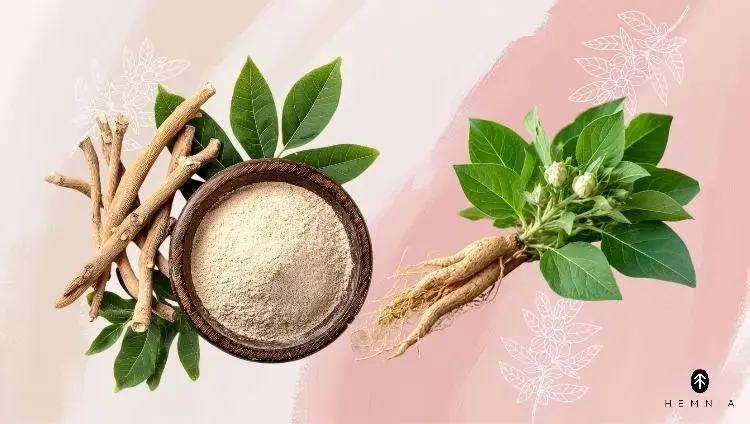
Ashwagandha (Withania somnifera), also known by its English name ashwagandha or Indian ginseng, is an evergreen shrub from the nightshade family. It grows in certain regions of Asia, Africa and southern Europe.
Its root has been used for centuries in traditional Indian Ayurveda. You may also come across it referred to as ‘Indian ginseng’, but botanically it is not related to true ginseng.
Ashwagandha is classified as one of the so-called adaptogens. This term refers to plants and substances believed to help the body adapt to stress. However, it is not a precisely defined group of medicinal substances with uniformly proven effects.
What does ashwagandha contain?
Among the most extensively studied active compounds are withanolides – natural compounds that contribute to the plant’s biological properties. Ashwagandha also contains alkaloids and other plant compounds.
The content of individual components depends, amongst other things, on whether the manufacturer has used the root, the leaves or a combination of both. And this is precisely why not all ashwagandha products are the same. Although two products may contain the same amount of extract, they differ in both the concentration and composition of their active ingredients.
What is ashwagandha good for? Effects according to scientific studies
Ashwagandha is said to offer a whole range of benefits, from improved sleep to enhanced physical performance. However, not all of these have equally strong scientific backing.
Its potential effects on stress and sleep have been the most thoroughly researched. In other areas, the results are as yet less conclusive.
1. Stress and mental wellbeing
Do you know those days when one task after another is running through your mind and you can’t even relax in the evening? Stress management is one of the most common reasons why people turn to ashwagandha.
In clinical trials, researchers have focused, amongst other things, on the relationship between ashwagandha use and subjectively perceived stress.
A 2024 meta-analysis, which included nine randomised studies with a total of 558 participants, found that people taking ashwagandha experienced lower levels of perceived stress and anxiety compared with those taking a placebo.
At the same time, researchers observed a decrease in cortisol levels, a hormone involved in the body’s stress response.
Whilst the results are encouraging, they do have their limitations. The studies were relatively small, of short duration and used different extracts. It is therefore not yet possible to say with certainty how significant an effect can be expected in an individual.
Furthermore, ashwagandha is not a substitute for professional treatment of anxiety disorders.
2. Sleep quality
Do you find it difficult to fall asleep in the evening, wake up during the night, or still feel tired even after eight hours’ sleep?
The effect of ashwagandha on sleep has been the subject of several clinical studies. A meta-analysis of five studies involving 400 participants revealed a small to moderate improvement in overall sleep measures compared with a placebo.
More pronounced results were observed primarily in people with insomnia, when the extract was taken for at least eight weeks, and in the subgroup receiving a dose of at least 600 mg per day.
Some studies also reported improved morning alertness.
However, it cannot be said that ashwagandha works like a standard sleeping pill. The research mainly examined changes associated with regular use, rather than immediate sleep induction following a single dose.
3. Memory and concentration
When you have a lot on your plate, with work tasks and daily responsibilities piling up, it can be harder to maintain your focus or recall information that you would not normally forget.
Research into ashwagandha has also yielded interesting results in this area. A meta-analysis from 2026, which included 20 studies with a total of 1,249 participants, found favourable results for certain measures of memory, attention and information processing speed.
Nevertheless, these results should be viewed with caution. The studies used different formulations, involved different groups of participants, and the certainty of the evidence varied across the individual measures.
4. Physical performance and recovery
Research also focuses on the area of physical performance and recovery, primarily examining muscle strength, endurance and physical performance.
Some clinical studies have found more favourable results with the use of the extract than with a placebo.
For example, in an eight-week study involving 57 young men who had not previously engaged in regular strength training, the group taking 300 mg of root extract twice daily recorded a greater increase in muscle strength during the training programme.
However, this was a relatively small study focusing on a specific group of men. It is not possible to infer the same effect in women or in all athletes.
Ashwagandha may therefore be an interesting subject for sports research, but it is still true that it is no substitute for regular exercise, good-quality sleep and a balanced diet.
5. Energy, immunity and other possible effects
You may also have come across claims that ashwagandha boosts energy, strengthens the immune system, reduces inflammation or helps maintain blood sugar levels.
Although some studies have reported reduced fatigue, they do not prove that ashwagandha directly boosts energy like a stimulant. For some people, a feeling of greater vitality may be more closely linked to lower stress levels or better sleep.
As regards immunity and inflammation, the evidence currently available is mainly based on laboratory and pre-clinical studies. There is as yet insufficient high-quality evidence to suggest that taking ashwagandha reduces the incidence of infections or treats inflammatory conditions.
The evidence regarding its use in diabetes is similarly limited.
What effects does ashwagandha have on men?
Although ashwagandha is of particular interest to people seeking relief from stress and sleep problems, a significant part of the research also focuses on its potential effects on male hormones, fertility and physical performance.
Testosterone
A meta-analysis published in 2026 included 23 randomised studies with a total of 1,706 participants.
In the male subgroup, researchers found that testosterone levels were, on average, higher in those taking ashwagandha than in those given a placebo. However, as the results varied depending on the study population and the extract used, it cannot be assumed that ashwagandha will increase testosterone levels in every man.
No similar increase in testosterone was demonstrated in women.
Male fertility
Some smaller studies have reported improvements in selected semen analysis parameters (such as sperm concentration or motility).
However, there is currently little clinical evidence, and improved semen analysis results do not in themselves prove a higher likelihood of conception.
Therefore, ashwagandha is not a proven treatment for male infertility or low testosterone levels.
Which form of ashwagandha should you choose: tea, gummies, capsules or powder?
Ashwagandha is available in several forms. They differ in terms of how they are taken, the concentration of plant compounds, and how accurately the dose can be determined.
It is not just the form itself that matters, but also the part of the plant used, the type of extract and its composition.
Tablets and capsules
Tablets and capsules are particularly practical because they contain a precisely measured amount of extract. Standardised extracts are among the most frequently studied preparations in clinical trials focusing on stress and sleep.
Another advantage is that it is easy to monitor your daily intake.
Do you prefer a precisely measured dose and would you like to try ashwagandha? Hemnia Ashwagandha Calm & Balance is available in packs of 30 or 90 capsules, with each vegetable capsule containing 500 mg of ashwagandha root extract standardised to 1.5% withanolides.
The only other ingredients are microcrystalline cellulose and a vegetable capsule.

Gummies
Gummies are gelatine-based or other jelly sweets containing ashwagandha. They may suit you if you don’t like swallowing tablets and capsules. However, their pleasant taste does not in itself indicate their effectiveness.
When choosing gummies, check the amount of extract in the recommended daily dose, any other active ingredients, and the sugar or sweetener content.
There is no convincing evidence that ashwagandha in gummy form is absorbed any better than from capsules.
Powder and concentrated extract
Powder is most commonly made from the dried root. It can be added, for example, to water or another drink.
With this form, however, it is important to distinguish whether it is powder made from the whole root or a concentrated extract.
This is because a concentrated extract may contain a significantly higher concentration of selected plant compounds, so 500 mg of extract cannot simply be replaced by the same amount of ordinary powder.
Tea and dried root
Making tea is one of the traditional ways of using ashwagandha. It can be made from dried root or from products designed for making an infusion.
The Dutch National Institute for Public Health and the Environment (RIVM) points out that the effects of ashwagandha tea have not been sufficiently investigated scientifically.
There is a lack of reliable evidence regarding the amount of individual active compounds that are released into the water during preparation, and whether they have the same effect as the standardised extracts used in studies.
How and when should you take ashwagandha?
Usage depends on the specific product, its composition and the reason why you are considering taking it.
Ashwagandha dosage: How many mg per day do studies recommend?
Clinical studies focusing on stress have used various doses, ranging from approximately 240 to 1,250 mg of extract per day. Many of the favourable results came from studies using doses of around 500–600 mg per day. However, this does not mean that 600 mg is the ideal or safe dose for everyone.
This is because individual extracts vary considerably in concentration and composition. A smaller amount of a highly concentrated extract may contain more withanolides than a larger amount of another preparation.
A universal recommended daily dose of ashwagandha has therefore not been scientifically established.
When taking it, follow the manufacturer’s instructions for the specific product and do not exceed the stated dose.
👩⚕️ If you are taking medication or have any health concerns, consult your doctor or pharmacist first.
When to take ashwagandha: in the morning or in the evening?
It depends primarily on how your body reacts to ashwagandha.
If you feel drowsy after taking it, you may find it more suitable to take ashwagandha in the evening. If you tolerate the product well and are taking it to manage stress during the day, it may be better for you to take it in the morning.
Research to date has not shown that the effectiveness of ashwagandha depends on the time of day you take it.
Some products recommend splitting the daily dose into two doses. You should therefore follow the instructions for the specific product.
How long does it take for ashwagandha to take effect?
Clinical trials do not usually assess what happens after the first capsule, but instead examine the effects of regular use over several weeks.
- Stress: Changes were often assessed in studies after approximately four to eight weeks.
- Sleep: More pronounced results were observed in studies lasting at least eight weeks.
- Physical performance: Changes were usually observed after several weeks of training and supplementation.
The claim that ashwagandha reliably begins to take effect within a few tens of minutes therefore lacks sufficient clinical evidence. However, even with prolonged use, you may not notice any change.
Side effects of ashwagandha: What should you watch out for?
Although ashwagandha is plant-based, it is not suitable for everyone.
Short-term clinical studies show that some standardised extracts are generally well tolerated by healthy adults. At the same time, however, there are side effects and situations in which its use may be risky.
Known side effects include:
- drowsiness,
- stomach upset,
- diarrhoea,
- vomiting.
In some people, digestive problems may be more severe.
Rare cases of liver damage have also been reported. In July 2026, the Australian Therapeutic Goods Administration (TGA) issued a warning regarding ongoing reports of these complications, including serious cases overseas.
If, whilst taking this product, you experience yellowing of the skin or the whites of the eyes, dark urine, severe unexplained tiredness, abdominal pain or persistent nausea, stop taking the product immediately and seek medical advice.
Who should not take ashwagandha?
People should avoid ashwagandha particularly in the following situations:
- Pregnancy and breastfeeding
- Thyroid disorders
- Liver disease
- Autoimmune diseases
- Planned operation
- Hormone-sensitive prostate cancer
Possible interactions with medicines for high blood pressure, diabetes, epilepsy, thyroid conditions or those that suppress the immune system are also important. Caution is also advised with sedatives and sleeping pills.
👩⚕️ If you are taking any of these medicines, do not start taking ashwagandha without first consulting your doctor.
Is long-term use safe?
As most clinical trials have only monitored participants for a few weeks to months, there is insufficient reliable evidence regarding the safety of daily use over a period of several years.
How can you recognise high-quality ashwagandha?
If you decide to try ashwagandha, pay particular attention to the information on the label.
Look for products where the manufacturer clearly states:
- The Latin name of the plant: Withania somnifera.
- The part of the plant used: For example, the root or a combination of root and leaves.
- Amount of extract: Ideally, both per single dose and in the recommended daily intake.
- Standardisation: Information on the withanolide content.
- Full composition: Including other active ingredients and excipients.
When assessing the effects, pay particular attention to standardised root extracts, as there is more clinical data available for these.
However, a higher percentage of withanolides does not automatically mean greater efficacy or improved safety.
For example, 300 mg of extract standardised to 5% withanolides contains 15 mg of these substances, according to the declaration. However, if another product contains the same amount of withanolides obtained by a different process, it may not have the same biological effects.
Ashwagandha is a dietary supplement, not an approved medicine for stress or insomnia.
Ashwagandha and balance: Every body has different needs
Ashwagandha is an adaptogenic herb whose potential effects are still being researched. So far, the strongest scientific evidence supports its potential for managing stress and improving certain aspects of sleep. However, its effects may vary from person to person, and it is no substitute for rest, a balanced diet or professional care.
If you decide to try ashwagandha, focus primarily on the ingredients and the clearly stated amount of extract.
You can also find Hemnia Ashwagandha in packs of 30 capsules. This means you can opt for a smaller pack if you are just starting to take it.
And if you’ve been struggling with stress, exhaustion or poor sleep for a long time, it’s worth looking into the underlying causes as well.
Listen to your body, respect its needs and treat yourself to the care that makes sense to you. Because it is in the little things of everyday life that the path to greater well-being begins. 💞
FAQ
1. Does ashwagandha work for everyone?
No. Clinical studies look at the average results of groups of participants and cannot predict an individual’s response. Some people may notice a change, whilst others may not experience any benefit.
2. Does ashwagandha cause drowsiness?
Yes, drowsiness is one of the known side effects. However, it does not occur in everyone and is not in itself a sign of effectiveness. If you feel drowsy after taking it, do not drive or operate machinery until the drowsiness has worn off.
3. Can ashwagandha be combined with coffee?
There are few high-quality studies on the combination of ashwagandha and caffeine. It is therefore not possible to reliably determine how their effects will interact.
Furthermore, coffee may exacerbate nervousness or sleep problems in sensitive individuals, which is worth bearing in mind when assessing the effects of ashwagandha.
4. Do you need to take breaks when using ashwagandha?
There is no high-quality clinical evidence to suggest that regularly alternating periods of use with breaks improves the efficacy or safety of ashwagandha. At the same time, however, there is insufficient data to consider continuous, long-term use safe.
5. Is ashwagandha suitable during the menopause?
Ashwagandha is sometimes recommended for women going through the menopause; however, there is currently insufficient high-quality evidence regarding its effect on hot flushes, hormonal changes or other menopausal symptoms. It cannot therefore be recommended as a proven treatment for these symptoms.
6. Can ashwagandha be addictive?
In the available clinical trials, addiction was not the primary outcome under investigation. Consequently, there is insufficient high-quality data to reliably assess the risk of addiction and any potential withdrawal symptoms. It cannot automatically be concluded that long-term use is risk-free.
7. Is ashwagandha suitable for children and adolescents?
The available studies on efficacy and safety mainly concern adults. There is insufficient high-quality evidence for children and adolescents to establish safe use. It is therefore not advisable to administer it to this age group without the recommendation of a specialist doctor.
Sources:
- pubmed.ncbi.nlm.nih.gov/
- pubmed.ncbi.nlm.nih.gov/39348746/
- pubmed.ncbi.nlm.nih.gov/34559859/
- pubmed.ncbi.nlm.nih.gov/42199854/
- pubmed.ncbi.nlm.nih.gov/26609282/
- pubmed.ncbi.nlm.nih.gov/41740946/
- pubmed.ncbi.nlm.nih.gov/30466985/
- pubmed.ncbi.nlm.nih.gov/42198398/
- ods.od.nih.gov/factsheets/Ashwagandha-HealthProfessional/
- nccih.nih.gov/health/ashwagandha
- rivm.nl/publicaties/risk-assessment-of-herbal-preparations-containing-withania-somnifera-ashwagandha
- tga.gov.au/news/safety-updates/withania-somnifera-ashwagandha-and-very-rare-risk-liver-injury
Author: Patricie Mikolášová
Foto: AI, Canva
Briefly and simply:
- Hemnia does not want to and cannot replace the professional care of your doctor.
- Hemnia products are not medicines (or medicines), so please do not treat them as such.
- Hemnia offers cannabis products, but do not look for any narcotic or psychotropic substances with us. We do not offer or recommend them.
Read the full text of the Disclaimer here.
Recommended products2
Hemnia Ashwagandha Capsules 30 x 500mg